Loading…
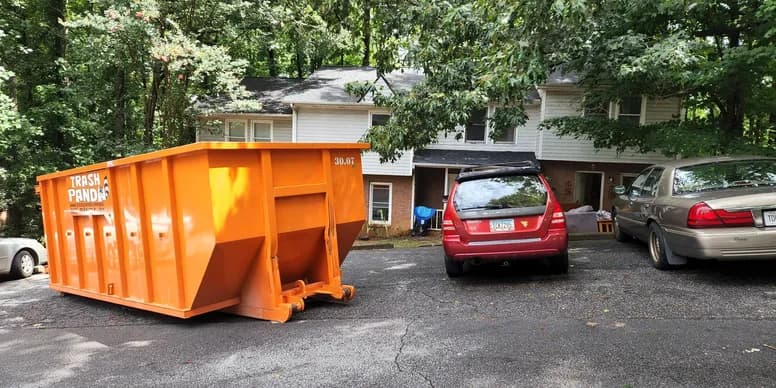
From small cleanouts to full demolitions - compare all five standard roll-off dumpster sizes.
Choosing a dumpster rental size is one of the few decisions in the whole process that directly affects both your price and whether your project actually gets finished in one delivery. Roll-off dumpsters come in five standard sizes - 10, 15, 20, 30, and 40 cubic yards - and the right one depends less on how big your house or job site is and more on how much debris a specific project actually generates, and how dense that debris is.
A common mistake is sizing based on gut feeling rather than the project itself: a full kitchen remodel with cabinetry, countertops, and flooring debris almost always needs more room than it sounds like on paper, while a single-room decluttering job rarely fills even the smallest standard size. It helps to think in two dimensions at once - volume (how much space the debris takes up) and weight (how heavy it is per cubic yard) - since dense material like concrete, dirt, or roofing shingles can hit a dumpster's weight limit well before it looks full, regardless of which size you rented.
Below, we break down which size fits which kind of project, followed by the full lineup with exact dimensions, capacity, and pricing guidance for each. If your project doesn't involve loading anything yourself - you'd rather a crew handle the lifting and hauling - it may be worth comparing against our junk removal services instead of a self-service dumpster rental.
It also helps to think about rental duration alongside size. Smaller dumpsters like the 10 and 15 yard typically come with a standard 7-10 day window, which comfortably covers weekend projects and short remodels. Larger sizes - 20 yard and up - are more often tied to contractor-driven timelines, so providers commonly offer a slightly longer default window, or a flexible extended rental, to match. If your project depends on a roofer, flooring crew, or general contractor's schedule, confirming your rental period against their expected timeline before booking is worth the extra two minutes - it's the most common reason homeowners end up paying for an unplanned extension.
Placement is the other variable that catches people off guard. Every size on this page needs a reasonably flat, accessible surface - most homeowners use a driveway, which usually doesn't require a permit. Street placement is sometimes necessary for larger sizes or tight properties, and that almost always means checking with your city first. Overhead clearance for power lines and low branches, and a clear path for the delivery truck, matter more as the dumpster gets larger - a 40 yard unit has very different site requirements than a 10 yard.
One more factor worth planning around: what you're actually disposing of. Household junk, wood, and drywall behave predictably across all five sizes, but materials like concrete, roofing shingles, dirt, and brick are dense enough that weight limits - not available space - usually determine which size makes sense. Mixing a small amount of heavy debris into an otherwise light load rarely causes issues, but a project that's mostly heavy material (a full driveway tear-out, for example) often calls for a dedicated heavy-debris dumpster rather than sizing purely by volume. Each size's dedicated page below covers its specific accepted materials and weight guidance in more detail.
A single-room remodel, a garage purge, or a pre-move declutter - most small residential jobs fit comfortably in a 10 yard.
A kitchen or bathroom remodel, a roof tear-off, or multi-room flooring replacement - the two sizes most homeowners actually rent.
New construction debris, a whole-house cleanout before a sale, or a large addition - high-volume jobs that outgrow a 20 yard.
Full demolitions, industrial cleanouts, and major new construction - the largest standard roll-off size, reserved for high-volume jobs.
Get matched with trusted local dumpster rental providers in minutes - free and with no obligation.