
Loading…
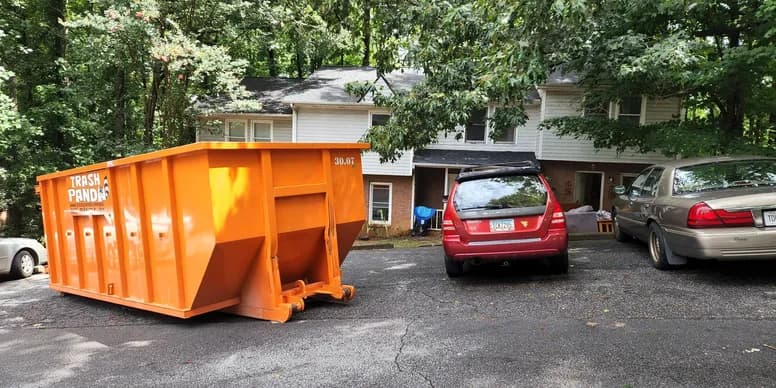
General household junk - old boxes, clutter, small furniture, and miscellaneous items - is the most common and broadly accepted material type.
Get a Free Quote
No obligation - just tell us about your project.
Yes - this material is generally accepted.
Hazardous items (paint, chemicals, batteries) should never be mixed in with general junk.
Household junk is the broadest, most common material category most dumpster providers work with - the catch-all for general clutter, small furniture, boxes, and miscellaneous items that don't fit neatly into any of the other categories on this list. Precisely because it's so broad, it's worth understanding what it actually includes, what it doesn't, and how it's priced compared to more specific material types.
The category covers general clutter, small furniture, boxes, and everyday miscellaneous items. It explicitly excludes hazardous materials like paint, chemicals, and batteries, and it often excludes appliances containing refrigerant, which need separate handling despite technically being household items. Knowing this distinction upfront avoids the most common mistake homeowners make when loading a household-junk dumpster: assuming everything in the house qualifies just because it's being thrown out.
Household junk itself isn't a single recyclable material - it's a mixed category by definition, so unlike concrete or scrap metal, there's no dedicated household-junk recycling stream at the load level. What recycling does happen tends to occur at the individual-item level: cardboard or scrap metal pulled out before the rest goes in. That's why sorting obvious recyclables out beforehand, if your area has curbside recycling, diverts meaningfully more than tossing everything into one dumpster and hoping for the best.
Because it's light and mixed rather than dense, household junk is usually the material category least likely to trigger a weight overage fee. Most household-junk dumpsters are size-limited rather than weight-limited, meaning the price mainly reflects dumpster size and rental length rather than tonnage. This is part of why household junk is the default, most affordable material category most providers quote against - the cost model is simpler than for weight-driven materials like concrete or drywall.
Cardboard - packaging, moving boxes - is technically a subset of household junk in most real-world loads, but it's worth calling out separately because how you handle it changes how much total volume your load takes up. Flattening boxes before they go in can free up a surprising amount of space compared to tossing them in intact, which matters more for a household-junk cleanout than almost any other cost-saving step available.
Sort out anything hazardous - old paint cans, cleaning chemicals, batteries - before loading begins, since these can't go in with general junk regardless of how small the quantity is. Set aside a donate pile for anything still usable to reduce your total disposal volume. And load bulky, oddly shaped items last so they settle into whatever gaps remain rather than dictating the shape of the whole load from the start.
A single-room decluttering project - a garage, a spare bedroom, a basement corner - usually fits comfortably in a 10 yard dumpster with room to spare. A whole-house cleanout, like preparing a home for sale or clearing out an inherited property, is a different scale entirely and often needs a 15 or 20 yard once every closet, cabinet, and storage area gets emptied at once. Estimating room by room rather than guessing at a single number for 'the whole house' tends to produce a more accurate size recommendation.
Estate cleanouts are one of the more emotionally and logistically complex sources of household junk, often involving decades of accumulated belongings across an entire property at once. Because so much of it may have sentimental or resale value mixed in with genuine junk, it's worth building in extra time to sort before anything goes in the dumpster, rather than treating the whole property as a single fast disposal job. A 15 or 20 yard dumpster with a slightly longer rental window is often a better fit for this kind of project than a fast, single-weekend rental.
It's common for a whole-house cleanout to also turn up items that technically belong to other categories on this list - an old lawnmower's scrap metal value, a pile of yard debris from an overgrown flower bed, a stack of moving boxes worth flattening separately. Pulling those out of the general household-junk pile, even informally as you go, can shave real cost off a large cleanout by keeping the bulk of the load in the cheaper, size-limited household-junk category rather than letting denser or differently-priced material inflate it.
Get matched with trusted local dumpster rental providers in minutes - free and with no obligation.