Loading…
At a glance, residential and commercial dumpster rental might seem like the same service with a different label. In practice, there are real differences in sizing, scheduling, and site logistics that are worth understanding before you book.
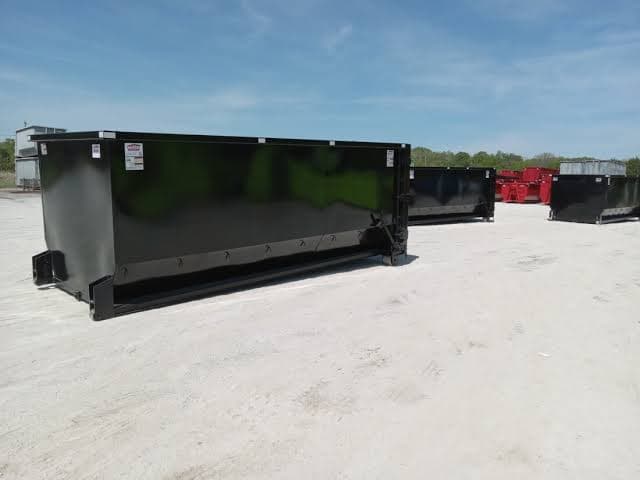
Residential projects - cleanouts, remodels, small renovations - typically fit within a 10-20 yard dumpster. Commercial and industrial projects, from office buildouts to warehouse waste, more often call for 20-40 yard sizes due to higher debris volume.
Residential delivery is usually flexible - most homeowners just need a window that works with their day. Commercial delivery often needs to be coordinated around business hours, tenant access, or building management approval, which local providers experienced in commercial service are equipped to handle.
While residential rentals are almost always a single, one-time delivery and pickup, many businesses set up recurring commercial service for ongoing waste needs - something that's rarely relevant for a homeowner doing a one-time project.
Residential placement is usually straightforward - a driveway or curb with a clear path from the street. Commercial sites introduce variables that rarely come up at a house: shared parking lots with other tenants' traffic, loading dock access that has to be scheduled around deliveries, or a property manager who needs advance notice before a roll-off truck can enter the lot. Multi-tenant commercial properties sometimes require a certificate of insurance from the dumpster provider before delivery is even allowed on site, an extra step that essentially never comes up for a homeowner's driveway. Ground protection is another commercial consideration - a dumpster sitting on a paved lot for an extended period, especially in warm weather, can leave marks that property management wants avoided, so some commercial rentals include protective boards under the bin as standard practice.
Both residential and commercial rentals follow the same basic permit rule - a dumpster on private property generally doesn't need one, while street or public-right-of-way placement usually does. Where it diverges is scale and frequency. A homeowner typically deals with a single permit application for a one-time project, if they need one at all. A commercial property with recurring waste service, or a contractor running multiple job sites, may need to manage permits repeatedly across different addresses and different city requirements - which is part of why many commercial customers rely on their provider to handle applications rather than filing themselves each time. Downtown commercial districts also tend to have stricter rules around dumpster placement hours, size limits on public streets, and required safety markings than typical residential neighborhoods.
Not every local provider handles both sides of the business equally well. A provider that's mostly built around residential cleanouts and remodels may be excellent at flexible, same-week delivery windows but less practiced at coordinating around a commercial tenant's operating hours or negotiating loading dock schedules. Conversely, a provider geared toward commercial and construction accounts may default to larger minimum sizes or standardized commercial terms that don't fit a homeowner's smaller one-time project well. When you request a quote, mentioning whether the job is residential or commercial - and any site-specific constraints like limited parking or a shared lot - helps match you with a provider who's set up for exactly that kind of delivery, rather than one just applying a generic process to a job it doesn't do often.
Junk removal shows up on both sides of this comparison, just for different reasons. Residentially, it's often the choice when a homeowner wants items hauled away without lifting anything themselves - an estate cleanout or a single bulky item like an old sectional. Commercially, junk removal is frequently used for smaller, appearance-sensitive jobs where a roll-off dumpster sitting in a parking lot for a week isn't practical - clearing out a single office suite between tenants, for example, where a crew can complete a same-day removal with no equipment left on site afterward. Some commercial property managers prefer junk removal specifically because it avoids the multi-day dumpster footprint in a shared lot entirely.
Regardless of type, the single biggest predictor of a smooth delivery is how much the provider knows in advance. Residential customers rarely think to mention low tree branches over a driveway or a narrow gate that limits truck approach angles, and commercial customers sometimes assume a provider already knows about a loading dock's operating hours from a prior vendor relationship that doesn't actually exist. Walking through access constraints - overhead clearance, gate width, nearby parked vehicles, or a property manager's required notice window - when you first request a quote, rather than waiting for the delivery driver to discover them on site, is what actually prevents the most common day-of delays on both residential and commercial jobs alike.
Commercial properties are far more likely to require proof of insurance from a dumpster provider before delivery than a residential customer ever would. Property managers commonly ask for a certificate of insurance naming the property as an additional insured, protecting against damage to pavement, landscaping, or nearby structures during delivery and pickup. Residential customers rarely need to think about this at all - a provider's standard insurance coverage is typically sufficient without any paperwork exchanged. This difference isn't about risk being inherently higher on a commercial site, but about commercial leases and management agreements typically requiring documented insurance for any vendor accessing the property, a formality residential rentals simply don't carry.
Multi-family residential properties - apartment complexes, condo developments - and mixed-use buildings often sit between the two categories described so far, borrowing logistics from both. Like commercial sites, they frequently require property management approval and may need insurance documentation. Like residential rentals, the actual debris often resembles household junk rather than construction material, especially for turnover cleanouts between tenants. Providers experienced with multi-family properties typically have a streamlined process for this middle ground - coordinating with a leasing office once rather than treating each unit's cleanout as a fully separate commercial booking, which can simplify both scheduling and cost for property managers handling multiple units.
Some projects don't fall neatly into either category - a home-based business cleanout, a duplex renovation, or a garage that doubles as a small workshop. In these gray-area cases, the deciding factor is usually less about the label and more about site access and volume: if the debris is comparable to a household project and the site is a residential lot, treating it as a residential rental is almost always the simpler path, even if some of the material is business-related. If the project involves a separate commercial address, shared access with other tenants, or a scale of debris more typical of a business operation, framing it as commercial when you request a quote gets you matched with a provider better equipped for those logistics from the start, rather than discovering a mismatch after delivery.
Can a homeowner rent a 30 or 40 yard dumpster if a project calls for it? Yes - size availability isn't restricted by whether the customer is residential or commercial, only by what fits the project and the site. Do commercial customers get different pricing? Pricing for commercial accounts sometimes reflects volume - a business setting up recurring service across multiple sites may qualify for different terms than a one-time residential rental, but a single commercial project is generally priced the same way as a comparable residential one. Is same-day delivery available for commercial jobs? It depends more on provider capacity and site access requirements, like insurance documentation, than on the customer type itself, so it's worth asking directly when you request a quote.
Occasional guides on dumpster sizing, pricing, and project planning. No spam.
Most household and construction debris is fair game - but a handful of materials need special handling. Here's what to know before you load.
Dumpster rental pricing depends on more than just size. Here's a breakdown of what actually drives the cost of your rental.
Get matched with trusted local dumpster rental providers in minutes - free and with no obligation.