Loading…
Roll-off dumpsters accept a wide range of materials, from household junk to construction debris. But a few categories - mostly hazardous or regulated materials - are restricted almost everywhere, and a few others depend on your local provider's policies.
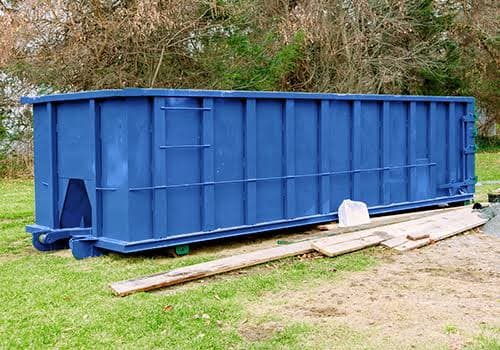
Most restricted materials fall into three groups: hazardous, regulated, or handled through a separate specialty process. Paint, solvents, pesticides, and chemicals are restricted almost everywhere because they can contaminate landfill sites or pose a fire risk in a mixed load - if a paint can is fully dried out and empty, it's often fine, but anything still liquid needs household hazardous waste drop-off instead. Tires are restricted or surcharged in most markets because most landfills won't accept them in bulk; a handful of loose tires from a garage cleanout may be tolerated with a per-tire fee, but a full set from a shop job usually needs a tire retailer or recycler. Appliances with refrigerant - refrigerators, freezers, and window AC units - need the refrigerant professionally recovered before disposal under federal environmental rules, which is why providers often ask whether an appliance has already been drained. Asbestos is the strictest category: even suspected asbestos-containing material, like old vinyl floor tile or pipe insulation in a pre-1980s home, requires licensed abatement rather than a standard dumpster, because disturbing it during a haul creates an airborne health risk.
Not everything that's allowed in a dumpster is the best use of the space. Scrap metal, for instance, is generally accepted - but many scrap yards pay for it, so separating out old appliances, pipe, or metal fencing before loading can offset part of your project cost instead of taking up paid dumpster volume for free. Cardboard and clean wood scraps are similar: most municipalities have recycling or wood-waste drop-off that's cheaper than dumpster disposal by weight, worth considering if you have a large volume of either. Yard waste - branches, leaves, grass clippings - is usually accepted in a dumpster, but many areas also offer curbside yard waste pickup or municipal composting that costs nothing extra, which can be the better call if your project is yard-waste-heavy and everything else is minimal. None of this is required - mixing recyclables into your dumpster load is completely fine and won't get a load rejected - but on larger projects, a little sorting can meaningfully reduce what you're paying to dispose of by weight.
Some items aren't dumpster-restricted so much as impractical to self-load - a dumpster will happily accept an old couch or mattress, but if you don't have the manpower to move it, that's a labor problem a bin can't solve. This is where junk removal fills the gap: a crew can handle awkward, heavy, or bulky items - pianos, safes, hot tubs - that are technically 'allowed' materials but unrealistic for one or two people to lift into a roll-off. Junk removal crews are also generally better positioned to handle small quantities of the trickier categories above, since they often have established relationships with recyclers and hazardous waste facilities for the odd item or two, versus a dumpster rental which expects you to self-sort strictly by the accepted materials list.
Restricted materials that make it into a dumpster don't just disappear at the landfill - transfer stations and landfills inspect incoming loads, and finding a prohibited item can have real consequences. At minimum, expect a rejected pickup: the provider may decline to haul the dumpster until the item is removed, delaying your project and potentially incurring a wasted trip fee. For hazardous materials specifically, many providers charge a contamination fee that can run significantly higher than a standard load, since a single container of paint or chemicals can force an entire load to be handled as hazardous waste rather than routine debris. Asbestos found in a load can trigger a full site stop and require professional remediation at the customer's expense, well beyond a standard fee. The cheapest path is always the simple one: keep restricted items out from the start, and ask your provider if you're not sure about a specific item before it goes in.
The accepted-materials list isn't arbitrary - it traces back to what the receiving landfill or transfer station will take, plus any additional restrictions the provider adds for safety or liability reasons. Two providers operating in the same city can have slightly different rules depending on which facility they haul to, which is why a strict national list rarely matches every local reality perfectly. Some transfer stations, for example, accept treated wood while others don't; some allow mixed construction and demolition debris in one load while others require it separated by category on-site. When you book, your provider's own accepted list - built around the specific facility they use - is the one that actually governs your rental, more than any general rule of thumb. This is also why moving between service areas, even within the same state, can mean a slightly different set of restrictions from one rental to the next.
Renovation and demolition jobs generate debris categories that don't come up in a household cleanout, and a few are worth flagging before you start. Painted or stained wood is typically fine in a standard load, but pressure-treated lumber is sometimes restricted or requires separate handling because of the chemicals used in treatment - worth confirming if your project involves an older deck or fence. Drywall is broadly accepted, but very large volumes of drywall alone are sometimes capped or charged differently, since gypsum can affect landfill chemistry in bulk. Roofing materials are almost always accepted but count heavily toward the weight limit - a full tear-off, even on a moderate-sized roof, can approach or exceed a size's weight allowance faster than the volume would suggest. If your renovation involves any of these materials in large quantity, mentioning it up front when you request a quote helps your provider recommend the right size and flag any category-specific handling before delivery, rather than after the load is already in the bin.
Can I put an old mattress in a dumpster? Yes, mattresses are generally accepted, though some providers charge a small per-mattress fee since they take up disproportionate space. What about carpet and padding? Also generally fine, and one of the more common materials in a remodel-related load. Can I mix construction debris and household junk in the same dumpster? Yes, most rentals don't require separating by category - the accepted-materials list applies to the whole load, not specific sections of it. Will a provider tell me if something isn't allowed before delivery? A good one will walk through your project during the quote process and flag anything that needs special handling in advance, rather than leaving you to find out at pickup.
Local rules vary more than most people expect - what's accepted in one city might be restricted in another. If you're not sure whether something belongs in your dumpster, it's always worth a quick check with your provider before loading it. Overage fees and rejected loads are almost always avoidable with a five-minute question up front.
Occasional guides on dumpster sizing, pricing, and project planning. No spam.
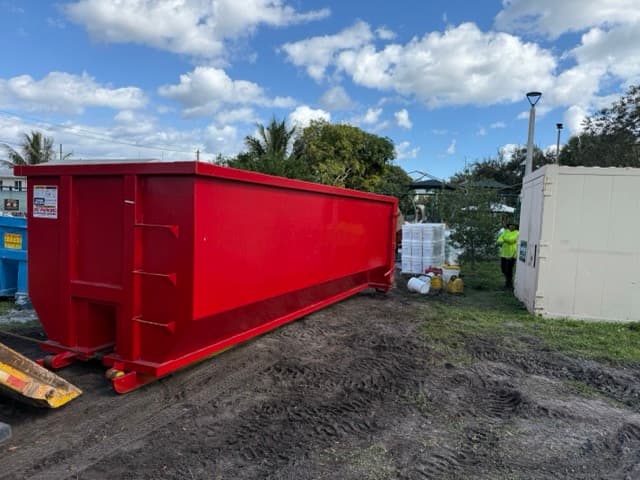
Dumpster rental pricing depends on more than just size. Here's a breakdown of what actually drives the cost of your rental.
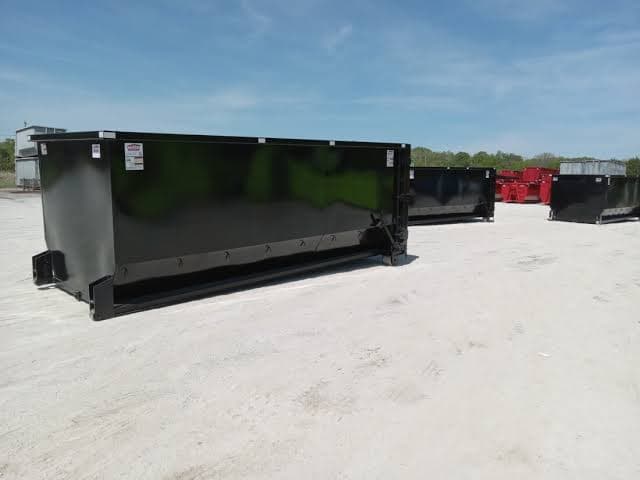
The core service is the same, but residential and commercial dumpster rental differ in scheduling, sizing, and site logistics.
Get matched with trusted local dumpster rental providers in minutes - free and with no obligation.